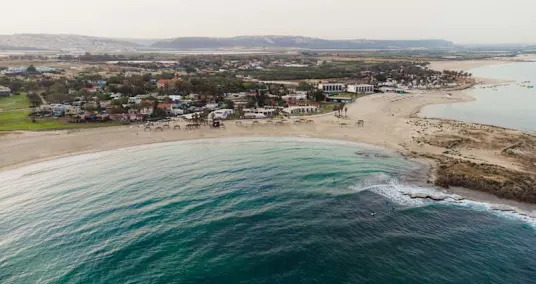
The discovery was made in an ancient shipwreck in the Dor Lagoon near the Carmel Coast, where archaeologists recovered nine pieces of unprocessed iron known as “blooms.”
Researchers from the University of Haifa said Wednesday that an underwater excavation off Israel’s northern Mediterranean coast uncovered what they described as the earliest known cargo of raw iron transported by ship, dating back around 2,600 years, Xinhua reported.
The discovery was made in an ancient shipwreck in the Dor Lagoon near the Carmel Coast, where archaeologists recovered nine pieces of unprocessed iron known as “blooms.” According to the university, the find provides direct evidence of how iron was transported in its earliest commercial stages.
The material was preserved in its original form, having solidified directly in a smelting furnace without undergoing forging or further refinement. Researchers said this distinguishes the cargo from later iron artifacts that typically show signs of shaping or tool-making.
Unlike copper and bronze, which could be melted into liquid form in ancient production processes, iron was heated with charcoal to produce a solid, porous mass. That mass was generally hammered to remove impurities and create denser material suitable for tools and implements.
The recovered blooms showed no indication of that secondary processing stage, suggesting they were transported immediately after production.

Earliest iron shipment discovered in ancient Mediterranean wreck
To determine the age and condition of the cargo, researchers conducted microscopic and chemical analyses.
Radiocarbon dating was also carried out on charred wood embedded in one of the pieces, helping confirm the timeline of the shipment. The findings were published in the journal Heritage Science.
Researchers said the cargo indicates that iron was being moved in raw form from production sites to other locations for further processing, pointing to a level of specialization in ancient manufacturing and trade networks in the Mediterranean.
The University of Haifa said the discovery provides new insight into early iron production and distribution practices in the region.
LATEST POSTS
- 1
 Los Angeles County sees significant uptick in norovirus cases, officials say
 - 2Artemis 2 astronauts fly around the moon in record-breaking lunar loop by NASA
- 3Figure out How to Improve Your Stream Voyage with Remarkable Trips and Exercises
- 4German unemployment rate falls to 6.4%, but 3 million still jobless
- 5The German series proving subtitles can be sexy — and wildly addictive





- Find the Abilities Required for Advanced Advertising Position
- Miss 'Stranger Things' already? Here's how you can get your Upside Down fix in 2026 with spinoffs, games and more
- Instructions to Choose the Best Material Organization for a Fruitful Rooftop Substitution
- British-Egyptian dissident apologises for tweets as Tories push for UK deportation
- Industrial zone damaged in Negev, falls in Sharon area after Iran fires missiles towards Israel
- One-third of asylum applications by Iranians approved in Germany
- Humpback whale stranded on Germany's Baltic coast frees itself
- Norovirus infections increase significantly, with positive test rates reaching 14%
- Viable Monetary Tips to Advance Your Monetary Circumstance