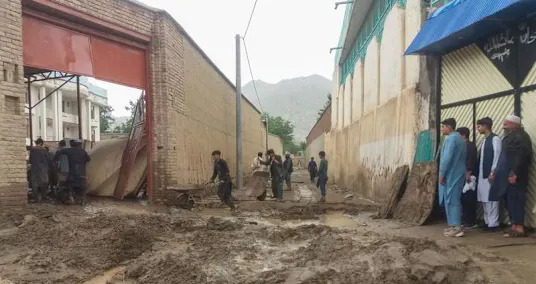
At least 61 people have been killed and 116 injured across Afghanistan since March 26 due to heavy rainfall, floods, landslides and lightning strikes, the Afghan government said on Saturday.
At least four people were still missing after floods affected thousands of families and damaged 2,448 houses, Afghan government spokesman Zabihullah Mujahid said in a post on X.
In addition, thousands of hectares of cropland was also destroyed, posing serious risks to rural communities who rely on agriculture for their livelihoods.
Deadly flooding has struck Afghanistan repeatedly in recent years, causing significant loss of life, injuries and widespread damage to homes, infrastructure and agricultural land.
Extreme weather events such as flash floods and droughts are increasing in Afghanistan, which experts link to the climate crisis.
Despite having a negligible carbon footprint, the country ranks among the most climate-affected nations and remains ill-prepared to cope after decades of conflict, poor infrastructure and a struggling economy, compounded by recent earthquakes and severe flooding.
LATEST POSTS
- 1
 Students were skipping my astrophysics class to play video games – so I turned the class itself into a video game
 - 2Netflix’s Price Hikes Just Got Rejected by an Italian Court. Here’s Why It Matters Everywhere
- 3‘Trip of suffering’: Gaza evacuee details 24-hour journey to South Africa
- 4Prehistoric wolf’s gut frozen in time reveals an ice age giant
- 5Palestinians reel under winter rains as Israel blocks Gaza shelter supplies




- Which European countries have mandatory or voluntary military service
- The Best Web-based Courses for Expertise Improvement
- I served on the expert committee that advised the government on new dietary guidelines – most of our recommendations were ignored
- Syria rejects forced deportations from Germany amid migration debate
- EU top diplomat Kallas arrives in Kiev to commemorate Bucha massacre
- Instructions to Pick the Ideal SUV Size for Seniors
- No more attempts to free whale stranded off Germany, officials say
- Beneficial Growing Conditions in West Africa Weigh on Cocoa Prices
- Turkey’s intel chief lays out country’s vision for Middle East, world