
Clocks across the majority of European countries are set to go forward by one hour early on Sunday as the continent moves to daylight saving time, also known as summer time.
Clocks in most European nations including Germany advance by one hour at 2 am (0100 GMT) to 3 am, heralding longer evenings and brighter days.
This means that for the coming months parts of Europe will be on Central European Summer Time (CEST), before moving back to Central European Time (CET) in the autumn, when clocks go back again by an hour on October 25.
The aim of the change is to make better use of daylight in the shorter days of the winter in the northern hemisphere.
The signal for the automatic changeover of the clocks in Germany comes from the Federal Institute of Physics and Metrology (PTB) in the northern city of Braunschweig, also known as Brunswick in English.
The institute's experts ensure that radio-controlled clocks, station clocks and many industrial clocks are supplied with the signal via a long-wave transmitter called DCF77 in Mainflingen near Frankfurt.
LATEST POSTS
- 1
 2025 Was Another Exceptionally Hot Year
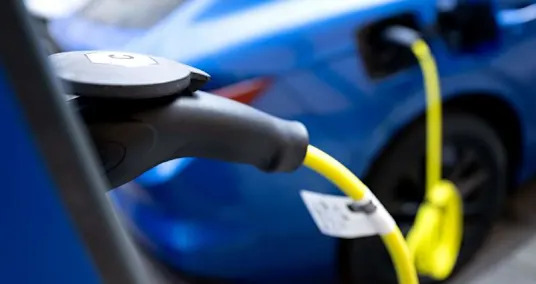
 - 2New electric car registrations rise sharply in Germany in March
- 3Why are NASA's Artemis astronauts wearing orange? What are they bringing to space? What to know about the preparation for their moon mission.
- 4Finding the Universe of Craftsmanship: Individual Encounters in Imagination
- 5Select Your Cherished Fish




- Passenger Missing After Going Overboard Disney Cruise Ship
- 20-year-old who threatened German train attack remanded in custody
- Poll: Only 25% of Americans think Trump has 'followed through' on his promise to release the Epstein files
- Old food pyramid vs. RFK Jr.'s new food pyramid. See what's different.
- Flu season is underway. What are common symptoms to watch for?
- German finance minister sees advantages of smartphones in schools
- Netflix Faces Wider Fallout After Italy Court Orders Refunds, Price Cuts
- The breakout star of NASA's Artemis 2 moon mission isn't an astronaut — it's the space toilet
- 6 Agreeable Earphones To Wear