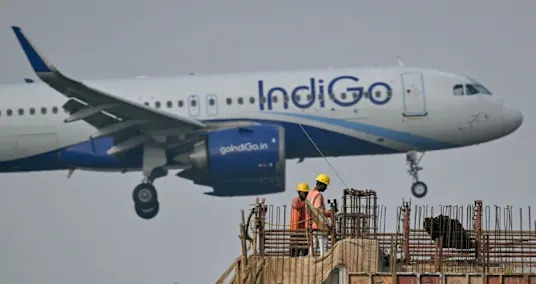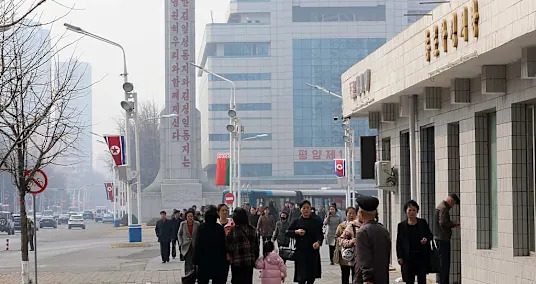
China has announced that its flag carrier, Air China, will resume direct flights to North Korea after a six-year pause, following the restoration of passenger train services between Beijing and Pyongyang.
This marks a significant step toward reopening North Korea, one of the world's most isolated nations, to the world.
Transport links between the two capitals had been suspended since the start of the Covid-19 pandemic in 2020, when Pyongyang implemented a very strict border closure.
While North Korean carrier Air Koryo already resumed flights to Beijing in 2023 and allowed Russian tour groups to visit in 2024, the return of China's air and railways are seen as a major economic milestone, as China has for decades been the main trading partner and a key source of diplomatic and economic backing for the country of 26 million people.
Before the pandemic, there were an estimated 300,000 foreign visitors in 2019, according to South Korea's Institute for International Economic Policy, and Chinese visitors accounted for 90% of all tourists to North Korea. Therefore, the long delay in resuming regular travel had surprised many regional observers.
"The reopening of these borders has been driven primarily by Pyongyang's timeline, which challenges the outdated assumption that Beijing dictates terms to a dependent client state," Seong-Hyon Lee, a visiting scholar at the Harvard University Asia Centre, explains.
Related
Nuclear ambitions complicated the relationship
Despite being Pyongyang’s primary ally, Beijing has frequently voiced disapproval over the North's persistent missile tests and nuclear ambitions. This aspect created a bumpy relationship with Pyongyang, with analysts saying that a nuclear-armed North Korea has often been something of a liability.
The diplomatic normalisation was highlighted last September, when Kim Jong Un attended a massive military parade in Beijing alongside Russian President Vladimir Putin. This was Kim's first appearance at a Chinese military display.
Lim Eul-chul, a North Korea expert at South Korea's Kyungnam University, argues that the war in Iran, in particular, increased "the need for closer coordination between the two nations".
LATEST POSTS
- 1
 Rick Steves Doesn't Want You Overlooking This Food Spot While In France
 - 2‘Everybody Loves Raymond: 30th Anniversary Reunion’ premiere date: How to watch, channel, time, cast and more
- 3EU agrees on agriculture safeguards as fronts harden in Mercosur deal
- 4Help Your Insusceptibility: Good dieting and Way of life Tips
- 5Figure out how to Perceive Warnings while Looking for an Auto Collision Lawyer


- Manual for Conservative SUVs For Seniors
- The most effective method to Alter Your Kona SUV for Greatest Solace and Comfort
- Dear Santa: I want Botox. Why cosmetic procedures are topping holiday wish lists.
- IndiGo lands IATA chief Willie Walsh as new CEO
- 100 new alien worlds: Scientists find hidden haul in data from NASA exoplanet-hunting spacecraft
- When will the Epstein files be released — and will they reveal anything new?
- Global measles cases drop 71% in 24 years as vaccination coverage improves, WHO says
- Forget 'Outer Banks.' These Gen Z-ers just want to watch 'M*A*S*H*' and 'Gilmore Girls.'
- Italy Brings In New Measures In 2026 To Tackle Overtourism