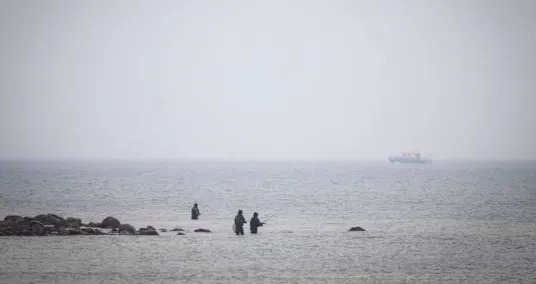
A humpback whale stranded for days off Germany's Baltic coast has gotten stuck on another sandbank, a Greenpeace spokeswoman said on Saturday.
The unlucky animal had garnered media attention for days, after it got stranded on a sandbank off Germany's Timmendorfer Strand resort, near the city of Lübeck, early on Monday.
Days of efforts to free the 12- to 15-metre whale proved unsuccessful until rescuers dug out a channel in the sand around the animal using a floating excavator on Thursday, allowing the whale to swim free the following night.
However, environmentalists and marine experts had feared that the animal could potentially get stuck again, as it was spotted heading back towards shallower water following its release.
Those fears became reality on Saturday, with the whale spotted stranded on a sandbank in the Bay of Wismar, some 40 kilometres to the east of Timmendorfer Strand, according to Greenpeace.
Large whales such as humpback whales are not native to the Baltic Sea. They may follow schools of fish in search of food and end up in the Baltic Sea.
According to experts, underwater noise could also play a role.

LATEST POSTS
- 1
 Iran war pushes Germany's deficit to 4.2% as growth outlook is cut by 50%
 - 2Dominating the Art of Composing: Creator Bits of knowledge
- 3This St Nick Truly Can Advise How To Drink And Hack Your Headache
- 4Nearly 16,000 New York City nurses prepare to strike as contract talks stall
- 5The most effective method to Explore Moral Situations in Brain research with Your Certification



- One third of Spanish pork export certificates blocked since swine fever outbreak, minister says
- South America's Memorable Destinations: A Movement Guide
- UN warns civil liberties under threat due to war in Middle East
- Go With The Breeze: Grand Paragliding Spots On the planet
- Holiday spots Well known With Americans In 2024
- How to watch ‘The Traitors’ U.K. Season 4 premiere today from the U.S.
- Vote In favor of Your Favored Menial helper Administration
- Fundamental Home Machines for Improved Solace in Summer
- New science points to 4 distinct types of autism